
Quality Assurance (QA) is an indispensable part of the software development lifecycle, ensuring that products meet high standards of quality, usability, and reliability. Despite its importance, QA teams often face a myriad of challenges that can hinder their effectiveness. In this article, we’ll delve into the most common QA challenges and explore actionable strategies to overcome them.
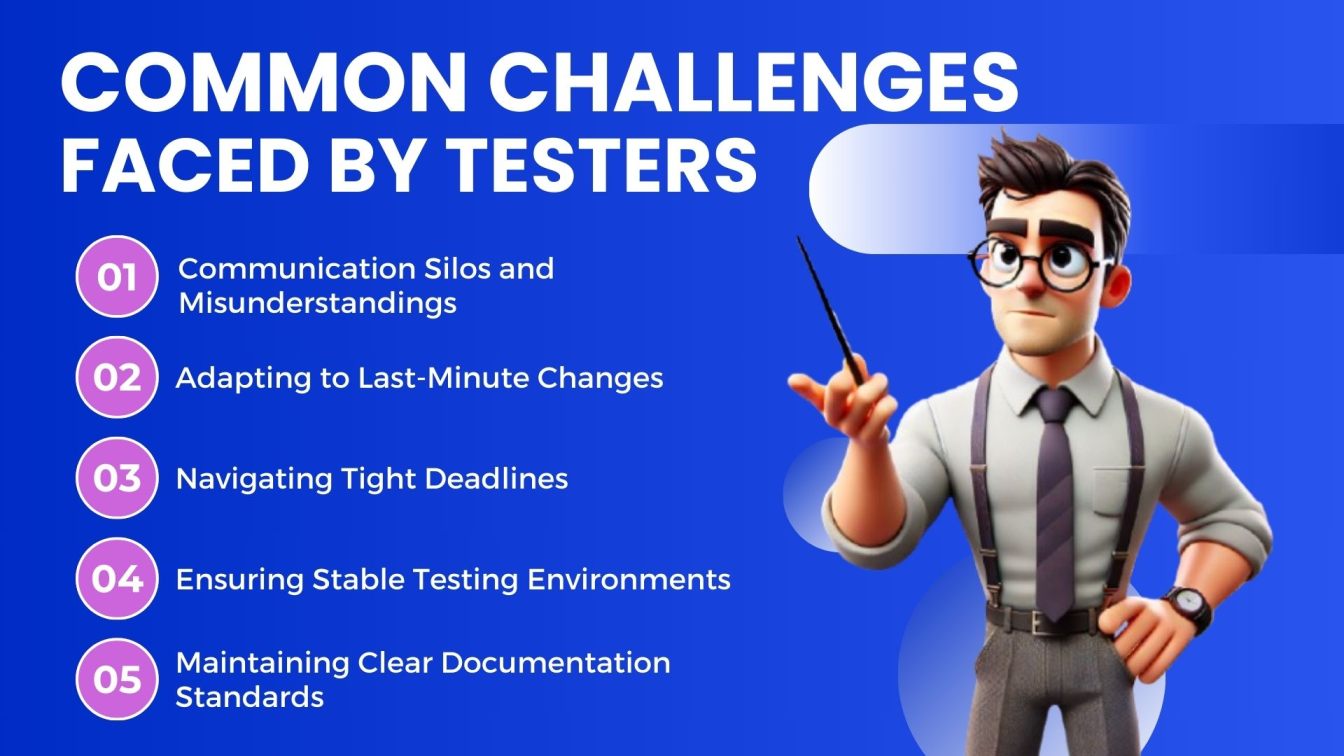
Understanding the Role of QA in Software Development
QA plays a pivotal role in verifying that software meets the expectations of stakeholders and end-users. The responsibilities of QA engineers span across planning, testing, and maintaining quality standards.
– What QA Engineers Do: QA professionals design test cases, perform manual and automated tests, and analyze outcomes to ensure the software meets specified criteria.
– QA vs QC: While QA is process-oriented, QC (Quality Control) is focused on product evaluation. QA ensures the right process is followed; QC ensures the final product meets the quality benchmarks.
Top Challenges Faced by QA Teams
QA teams navigate a variety of challenges, ranging from ambiguous requirements to managing limited resources. Let’s take a closer look at some of these hurdles.
– Communication Gaps in Teams: Miscommunication between developers, testers, and stakeholders can lead to errors in testing or misunderstood requirements.
– Ambiguous Requirements: When requirements are unclear or incomplete, it becomes difficult to design effective test cases.
– Tight Deadlines: QA teams often operate under strict timelines, leaving little room for thorough testing.
Managing Ambiguity in Requirements
Ambiguity in requirements can lead to wasted effort and missed defects. Here’s how to tackle this issue:
– Why Ambiguity Happens: Vague project goals, lack of stakeholder involvement, or miscommunication can result in unclear requirements.
– Techniques to Clarify Requirements:
– Conduct regular meetings with stakeholders.
– Use requirement analysis tools like JIRA or Confluence.
– Create detailed acceptance criteria for every feature.
Dealing with Unrealistic Deadlines
Time pressure is a universal challenge in software development. To handle this effectively:
– Root Causes of Time Pressure: Unrealistic expectations, poor project planning, or last-minute changes often result in compressed timelines.
– Strategies for Negotiating Realistic Timelines:
– Advocate for the importance of quality during planning stages.
– Use data from past projects to illustrate realistic timelines.
– Break testing into smaller, iterative cycles to deliver value incrementally.
Coping with Changing Requirements
Software projects often encounter scope creep, which can disrupt testing plans.
– Impact of Scope Creep: New features or changes mid-development may require additional test cases, increasing the QA workload.
– Agile Methodologies as a Solution:
– Agile embraces change by planning sprints and regular backlog refinements.
– Continuous feedback loops help teams adapt to changing requirements effectively.
Handling Limited Resources
QA teams frequently operate with constrained budgets and limited personnel.
– Budget and Personnel Constraints:
– Smaller teams and restricted budgets can limit the scope of testing.
– Making the Most of Limited Tools:
– Utilize open-source testing tools like Selenium, Appium, or JUnit.
– Focus on critical functionalities if time or resources are constrained.
Bridging Communication Gaps
Effective communication is vital for QA success.
– Common Communication Barriers: Language differences, siloed teams, and lack of transparency are common issues.
– Tools and Practices for Effective Collaboration:
– Use collaboration tools like Slack, Microsoft Teams, or Zoom.
– Encourage regular stand-ups and cross-team sync meetings.
Ensuring Comprehensive Test Coverage
Achieving 100% test coverage is often impractical, but improving coverage is always possible.
– Challenges of Test Coverage: Complex applications and limited time make it difficult to cover every scenario.
– Techniques to Achieve Better Coverage:
– Use risk-based testing to prioritize high-risk areas.
– Adopt test management tools like TestRail or Zephyr.
Real-World Examples of QA Success Stories
Several organizations have overcome QA challenges to achieve remarkable outcomes.
– Case Studies:
– A leading e-commerce platform reduced production defects by 50% by implementing a robust QA automation framework.
– A healthcare app successfully managed scope creep by adopting Agile methodologies and conducting bi-weekly retrospectives.
FAQs
What are the most common challenges in QA?
Ambiguous requirements, tight deadlines, and limited resources are among the top challenges.
How can teams handle tight deadlines?
By prioritizing high-risk areas, negotiating realistic timelines, and breaking down tasks into smaller, manageable chunks.
What tools are best for QA automation?
Popular tools include Selenium, Appium, TestComplete, and JUnit, depending on your project needs.
How do you measure QA success?
Metrics like defect density, test coverage, and the number of escaped defects are key indicators of QA effectiveness.
What is the role of QA in Agile?
QA works closely with developers to ensure quality at every stage, from sprint planning to continuous integration.
Why do defects escape to production?
Defects may escape due to insufficient test coverage, unclear requirements, or lack of proper testing environments.

Related Posts

Common QA Challenges and How to Overcome Them
Quality Assurance (QA) is an indispensable part of the software development lifecycle,...
 son vu
22/12/2024
son vu
22/12/2024

What is Quality Assurance? A Beginner’s Guide
Table of Contents What is Quality Assurance? A Beginner’s Guide1. What is...
son vu
20/12/2024